
"You've Got Everything Now"
The Comedy and Tragedy of Indolence

David Jensen: “Does this song [“You’ve Got Everything Now?"] reflect problems that you’ve had…?”
Morrissey: “I sound a mess - ‘you got everything now’. This is quite interesting although you may find it quite strange, I find it really interesting. It's a throwback to when I was at school. I was quite advanced when I was at school, and when I left school it seemed that all these really oafish clods from school were making tremendous progress and had wonderfully large cars and lots of money, and I seemed to be constantly waiting for a bus that never came. It seemed as though although I had the brains, I didn't really have anything else."1
Listen beginning at 10:00 in the following link to hear this part of the interview:
“You’ve Got Everything Now” was written by Morrissey and Johnny Marr in the spring of 1983. Originally, the song was more than six minutes long and contained additional lyrics that were dropped once it was recorded2.
That May - shortly after the Smiths signed with Rough Trade Records and released their debut single, “Hand in Glove” - the band recorded a selection of songs they hoped to include on their anticipated debut album. Although Rough Trade wouldn’t officially greenlight the album until later that summer, the Smiths wanted to create a demo to give potential producers a sense of the material they intended to record. This rough recording, which included “You’ve Got Everything Now”, was captured on cassette using a single stereo microphone. The Smiths recorded the songs in a rehearsal room above manager Joe Moss’s Crazy Face clothing shop on Portland Street in the heart of Manchester. This recording was later dubbed ‘The Pablo Cuckoo Tape’. 3
Listen to this raw recording of the song taped above the Crazy Face shop in the following link (“You’ve Got Everything Now" is the initial track on this cassette tape recording):
The Smiths debuted the song at a concert at the University Of London Union on May 6, 1983, making it the show opener. The Smiths went on to perform the song at least 87 more times (perhaps more), the last occasion being at the Warner Theatre in Washington D.C. in June 1985 on their Meat Is Murder tour4.
The Smiths professionally recorded the track for the first time on June 26, 1983 (along with “These Things Take Time” and “Wonderful Woman”) for the Smiths’ first appearance on David ‘Kid’ Jensen's5 BBC Radio 1 program6, which was broadcast on July 4th. Dale Griffin7 produced the tracks for the Smiths.
Listen to the Jensen version here:
The track was recorded a second time in July/August of 1983 during the ill-fated sessions with producer Troy Tate at London's Elephant Studios, intended for the Smiths’ debut album. The band did not choose Tate themselves; rather, he was hand-picked by Rough Trade. As Morrissey later recalled:
“…we don’t object because we all quite like Troy, but his presence indicates a lack of concentration on our part, because we don’t actually know him, and this unfortunately reveals itself in the rash rumble coming from the speakers. It is not Troy’s fault, but recording does not go well, and we feel that we must have another shot at it in view of the goggle-eyed interest from the weekly music papers.”8
Listen to the Troy Tate version of "You've Got Everything Now" here:
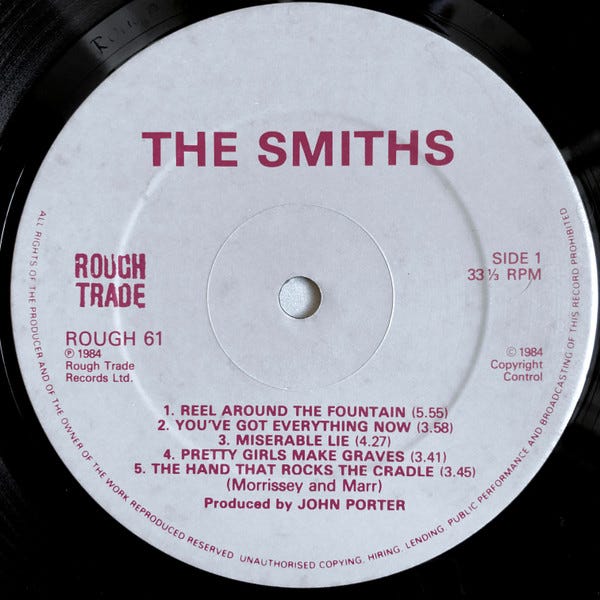
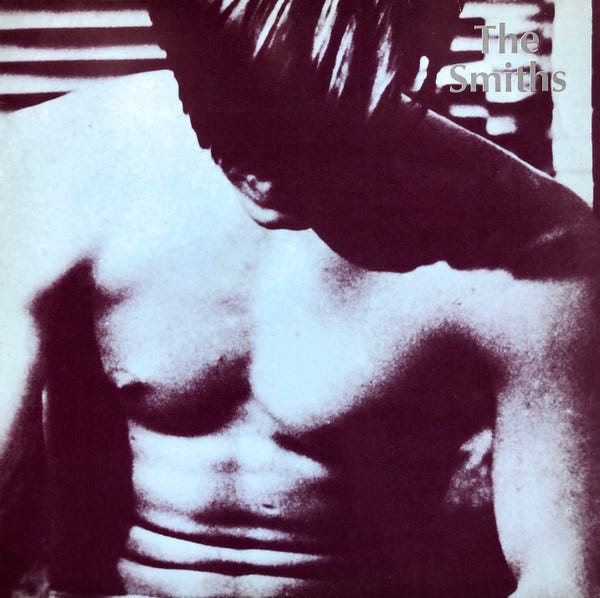
The definitive version of "You've Got Everything Now" was recorded in October 1983 at Pluto Studios in Manchester, this time with producer John Porter. A Hammond organ played by Porter’s friend Paul Carrack9 was added to song during additional mixing sessions in November 1983 at Eden Studios in London. The Porter version of the song is the second track on the Smiths’ eponymous studio album, released on February 24, 1984.
Listen to the Porter version of the song in the following link:
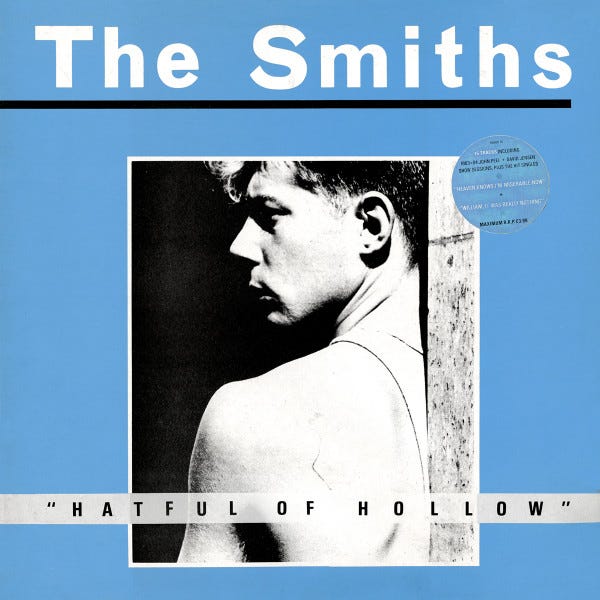
The David Jensen radio program session version of the song from June 1983 was released in November 1984 on Hatful Of Hollow, the Smiths’ first compilation album.
As was his habit, Morrissey includes borrowed words in the song, beginning with its opening line: “As merry as the days were long”, lifted almost word-for-word from Shelagh Delaney’s play A Taste of Honey10 - which, ironically, had itself taken the phrase from Shakespeare’s Much Ado About Nothing.11
The line “But did I ever tell you, by the way / I never did like your face” is also drawn from Shelagh Delaney, this time from her 1960 play, The Lion In Love12, where a character says, “Shall I tell you something? I don't like your face.”
Then there’s the line, “I've seen you smile / But I've never really heard you laugh / So who is rich and who is poor?” - strikingly similar to a bit of dialogue from the 1944 film Mr. Skeffington13, one of Morrissey’s favorite movies.14 In the film, Bette Davis tells Claude Rains, “Although I've never really seen you smile I always have the feeling you're laughing at me... besides the fact you're very rich".
On its face, “You’ve Got Everything Now” is a bitter and emotionally charged track into which Morrissey manages to weave a myriad of themes - envy, alienation, adolescent school life, and even a possible critique of Thatcherite Britain - while also revealing a self-destructive inclination to submit in exchange for recognition.
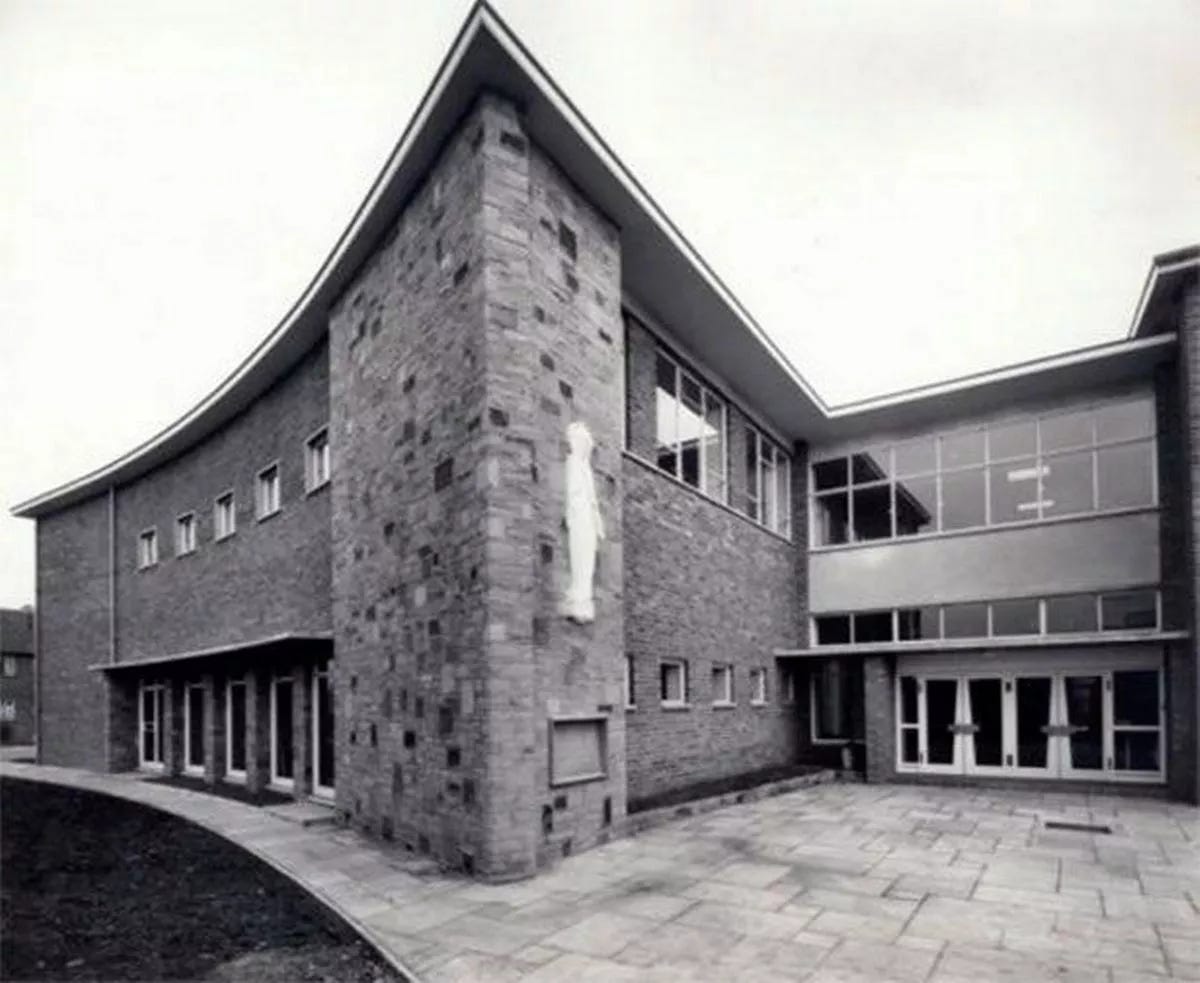
As Morrissey explained in his 1983 interview with David Jensen, the song is about his experience at school, where he did quite well academically15. Morrissey participated in athletics and, remarkably, was largely immune from the physical excesses of the teachers, which he famously addresses in the Smiths’ “The Headmaster Ritual”.
The lyrics of “You’ve Got Everything Now” juxtapose the narrator’s past success at school (“Back at the old grey school / I would win and you would lose) with both his current aimlessness (“What a terrible mess I've made of my life”) and the apparent success of a former peer who has now “got everything.”
Morrissey appears to make an oblique jab at the Thatcher administration, which governed the UK at the time he wrote the song, with the line: “No, I've never had a job / Because I’ve never wanted one.” However, this political slant, assuming it truly exists, becomes less certain in the song’s middle section, where he instead attributes his joblessness to being “too shy.” Then there are his interviews where he revealed his long-felt antipathy toward conventional employment, which further dilutes any political element in this line.16
The line “You are your mother's only son / And you're a desperate one” adds a layer of ambiguity; while it could easily be self-referential (Morrissey himself was his mother’s only son), it’s delivered in the second person, suggesting a confrontation or projection toward someone else, perhaps a mirror of the narrator’s own insecurities.
The songs outro sees the narrator expressing his desire to be “tied to the back of your car”, repeated over and over as the music fades out. This is an especially striking confession: darkly submissive to the point of being self-destructive, it also evokes a desperate need to be noticed, even at great personal cost.
Morrissey blurs the lines between friendship, resentment, and unspoken yearning, managing to capture the emotional volatility of youth in a manner that is both deeply personal and universally relatable. Marr’s chiming guitar, Rourke’s melodic bass, and Joyce’s steady drums give the turmoil and ache of youthful ennui a strangely buoyant frame. In the end, the song quietly asks: What if doing nothing isn’t a choice, but the only direction left when none seem worth taking?
David Jensen Show (UK, BBC Radio One). Morrissey was interviewed on the show on July 4, 1983, his first time on Radio One.
According to author Simon Goddard in his book, Mozipedia: The Encyclopaedia of Morrissey and the Smiths, the dropped lyrics include: “When you lost the will to go on, I gave you some / You never really wanted the truth and so I never gave it you / I’ve never had a friend because I’ve never wanted one / make your move”.
‘The Pablo Cuckoo tape’ includes unproduced and unmixed versions of:
-You’ve Got Everything Now -Accept Yourself
-What Difference Does It Make?
-Reel Around The Fountain
-These Things Take Time
-I Don't Owe You Anything
-Hand In Glove
-Handsome Devil
-Miserable Lie
In 1997 the party in possession of ‘The Pablo Cuckoo Tape’ (‘Pablo Cuckoo’ is merely an alias that was subsequently given to this individual to protect their identity) shared the cassette with a third-party - later identified by the NME as being YouTube user by the nom de plume of ‘hipsterdisco’ - who then transferred the recording onto DAT before returning it to its owner. In March 2013 the transferred tape was leaked on the internet with the expectation that this would precipitate its formal release. However, the poor sound quality of the recording coupled with emerging legal threats from the record company scotched any potential release.
Morrissey has never performed the song as a solo artist.
David Allan Jensen (born 1950) is a Canadian-born British radio DJ and television presenter. Born in Victoria, British Columbia, Jensen began as a radio DJ on Radio Luxembourg. Jensen was later a broadcaster for the BBC from 1976 to 1984, as a host on BBC Radio 1 and presenter on the TV music programme Top of the Pops from 1977 to 1984. Jensen has also hosted and presented for Capital FM and ITV among other stations.
In addition to the three tracks recorded for the show, the single version of “Hand In Glove” (recorded in February 1983 and released in May) was included in the broadcast.
Terence Dale ‘Buffin’ Griffin (1948 – 2016) was an English drummer and a founding member of 1970s rock band Mott the Hoople. Later, he worked as a producer, and produced many of the BBC Radio 1 sessions from 1981 to 1994.
Morrissey, Autobiography (New York: Penguin Books, 2013), 158–159.
Paul Melvyn Carrack (born 1951) is an English singer, musician, songwriter and composer who has recorded as both a solo artist and as a member of several popular bands.
Near the end of Act 1, Scene 2, Helen, the protagonist Josephine’s mother, says, “…I was standing on a chair singing away merry as the day is long…”
In Act 2, Scene 1 of Much Ado About Nothing, Beatrice jokes about her unmarried state, saying: “No, but to the gate; and there will the devil meet me, like an old cuckold, with horns on his head, and say ‘Get you to heaven, Beatrice, get you to heaven; here's no place for you maids:’ so deliver I up my apes, and away to Saint Peter for the heavens; he shows me where the bachelors sit, and there live we as merry as the day is long.”
Described as a "follow up" to A Taste of Honey, The Lion In Love did not achieve that earlier play's success.
An American drama film directed by Vincent Sherman, based on the 1940 novel of the same name by Elizabeth von Arnim. The film stars Bette Davis as a beautiful but self-centered woman who has many suitors but marries Job Skeffington, played by Claude Rains, solely to save her brother from going to prison.
This film was mentioned alongside nine others in Portrait Of The Artist As A Consumer, a list of Morrissey's favourite films, symbolists, records and books published in the NME on September 17, 1983.
The school at issue is St Mary’s Secondary Modern School in Stretford, Manchester, where Morrissey was a pupil in the early 1970s. The school opened in 1955 and closed its doors in the early 1990s. Morrissey’s home at 384 Kings Road is a ten minute walk from the school. Morrissey had to cross the iron bridge referenced in “Still Ill” to go to and from the school as a double-track rail line ran between Kings Road and the intersection of Christie and Renton Roads where St Mary’s was located.
In an interview with Sounds (June 4, 1983), Morrissey quipped that “Jobs reduce people to absolute stupidity, they forget to think about themselves. There’s something so positive about unemployment.” In a post-Smiths interview on The One Show on BBC One (February 16, 2009), Morrissey said that “I was quite happy to be unemployed because I didn’t want to work. I didn’t want to have a job. I couldn’t think of a job I wanted to do, so I thought I shouldn’t do any.”